Ten kilometres west of Dubrovnik’s Old Town, on the south-facing flank of Koločep Island, there is a sea cave that briefly — and only briefly — turns the colour of liquid sapphire.
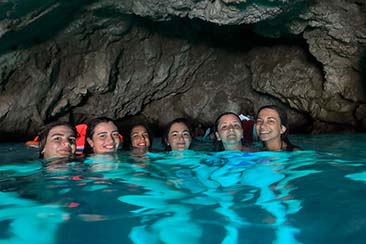
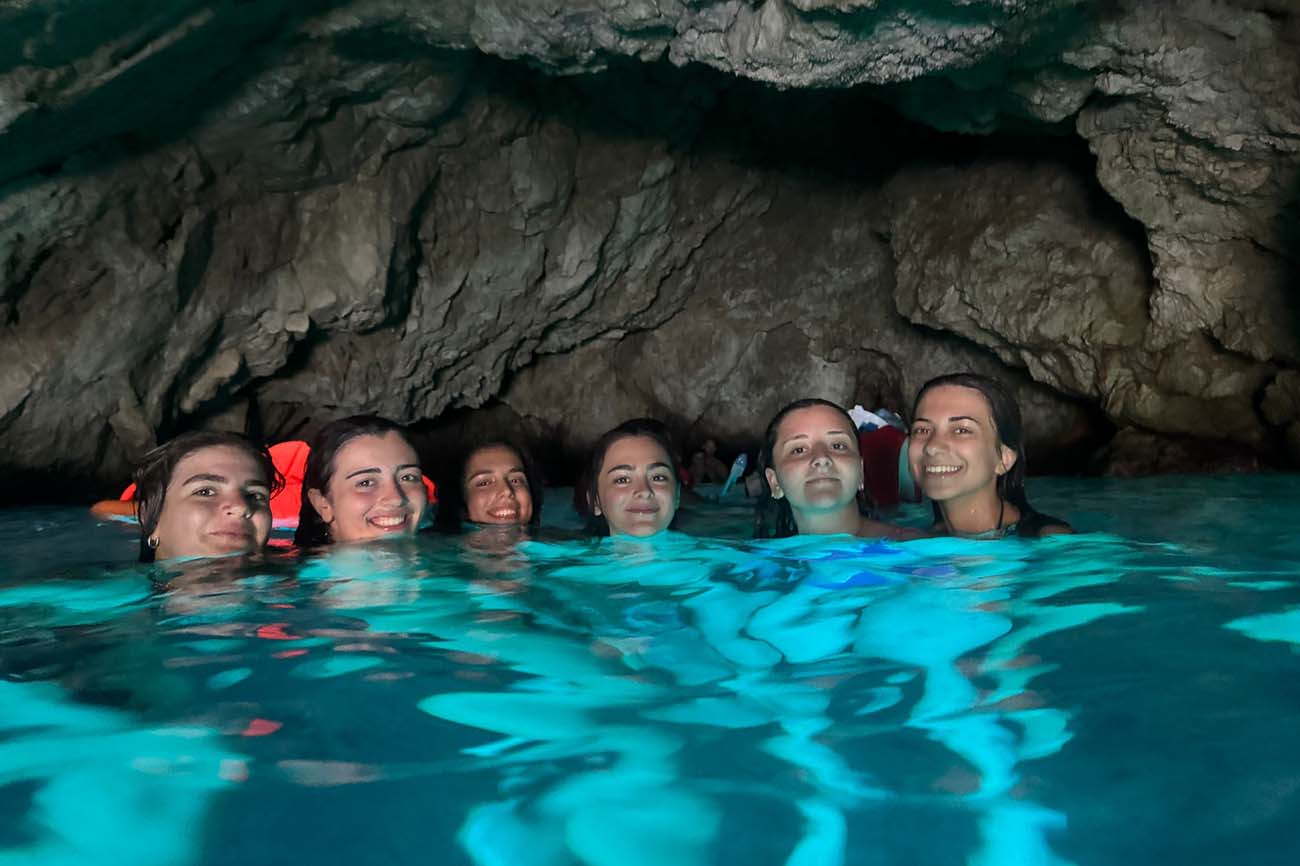
The effect is physics, not folklore. For about three hours each day, when the sun is high enough to strike the submerged entrance at the right angle, light refracts through the water, bounces off a floor of white limestone, and scatters back up through the cave’s interior. The result is a glow that looks computer-generated. Visitors who arrive ninety minutes too early or ninety minutes too late miss it almost entirely. The cave is still beautiful at those times — shaded, echoing, geologically theatrical — but the signature colour is a narrow window, and the window moves with the sun.
This is a guide to that window. When it opens, when it closes, what you actually see at each hour, and how to plan a blue cave tour dubrovnik visit that catches the cave at its most photographed. The Dubrovnik Blue Cave is a same-day, same-light phenomenon you can build around a single morning; if you know which morning to build.
What the Blue Cave Actually Is
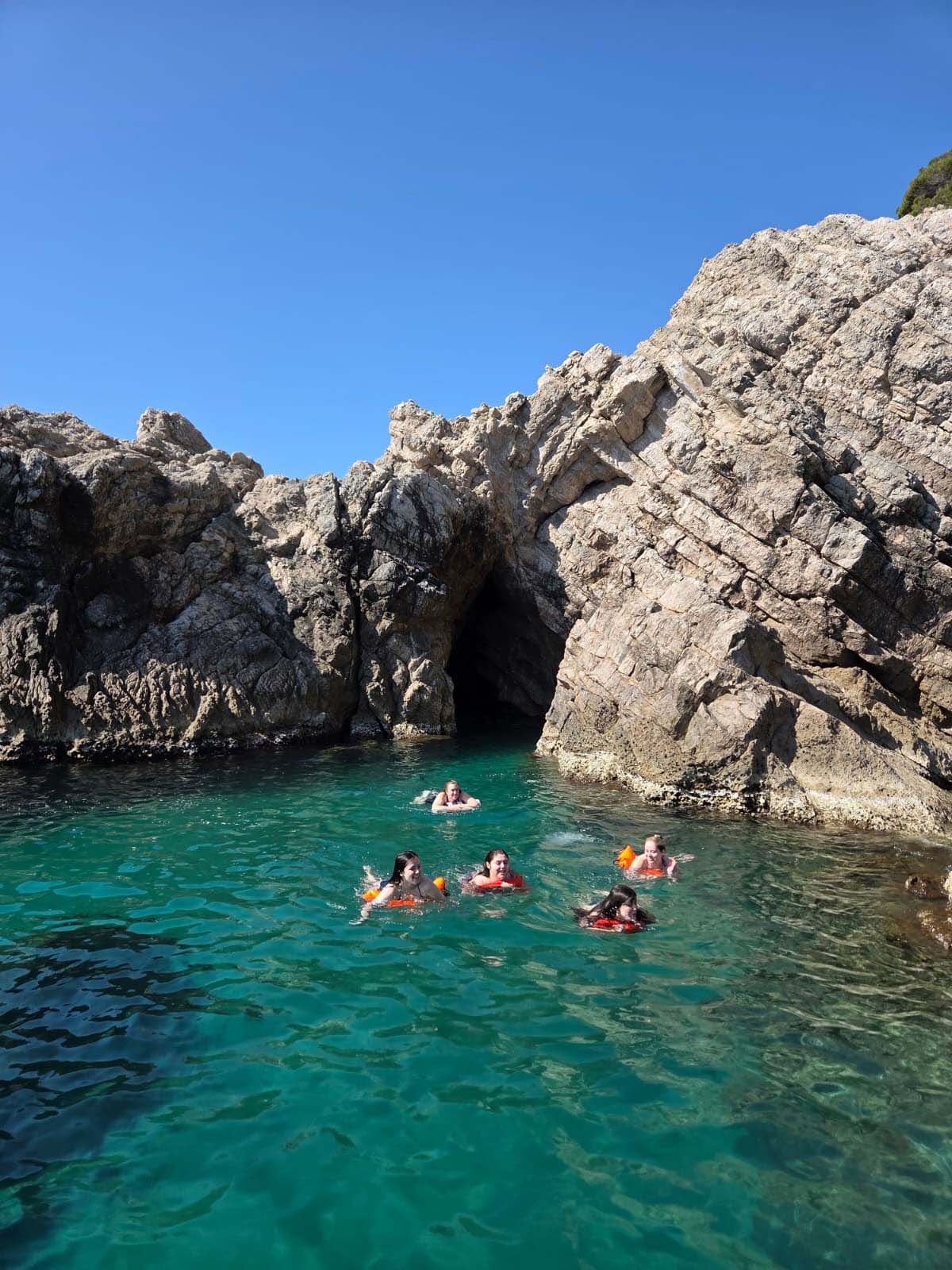
The Blue Cave of Dubrovnik — local name Modra Špilja — is a natural sea cave on the south coast of Koločep, the closest of the three inhabited Elaphiti Islands. About fifteen metres across at its widest, with a ceiling four to five metres above the waterline and a submerged entrance roughly a metre and a half below the surface, it is big enough to swim inside and small enough to feel intimate. The water clarity averages four to five metres of visibility — unusual even by Adriatic standards — and the floor is pale limestone scoured smooth by centuries of tidal movement.
The cave sits on the south-facing coast of Koločep — twenty minutes by speedboat from Marina Frapa, and the closest natural sea-cave light phenomenon to Dubrovnik’s Old Town. It is geologically native to the Elaphiti archipelago: the same electric-blue refraction physics travellers photograph across the Adriatic, except delivered from a marina you can walk to rather than from a three-hour catamaran transfer. For travellers based in Dubrovnik who want the experience without the logistical overhead of a full-day excursion, the Koločep cave is the native option.
The colour effect depends on three variables: sun angle, sea state, and cloud cover. All three matter. None of them are fully predictable, but they are predictable enough to plan around.
The Light Window, Hour by Hour
The short answer is that the Blue Cave glows best between 10:00 and 13:00 local time. Here’s what that actually means in practice.
07:00–09:00 — Pre-dawn and first light
Photographers love this window. The cave is empty, the sea surface is mirror-flat most mornings, and the quality of light outside is the one good camera advisors call “open shade” — no contrast, no harsh shadows, colours reading as they are. Inside the cave itself, however, the blue glow is weak. The sun hasn’t climbed high enough to penetrate the entrance at the required angle. What you get instead is a moody, slate-blue interior with green undertones from the algae on the cave walls. Still lovely. Not the signature shot.
09:00–10:00 — The blue cave tour dubrovnik departures begin
This is when the morning tours arrive. Garitransfer’s 09:00 departure from Marina Frapa reaches the cave by about 09:20, which places you inside during the first third of the light window — the moment when the electric blue starts to build. You’ll see the floor beginning to fluoresce, and the first bands of reflected light tracking across the ceiling.
Strong swimmers can dive down and watch the entrance from beneath the surface, which is where the physics becomes visible: the submerged opening acts as a giant prism, bending white sunlight into the cave as pure blue.
10:00–11:00 — Peak clarity, low traffic
If you’re choosing a single hour, this is the one. The sun has cleared the eastern horizon enough to strike the cave mouth at an angle that maximises refraction, but the midday tour boats haven’t yet arrived. Water clarity is still at its morning best (tour boat activity in the afternoon stirs fine sediment that drops visibility by a metre or two). The interior reads as a saturated, almost supernatural blue — the colour that shows up in the professionally photographed marketing shots, which travellers often assume are edited.
They aren’t. The colour is genuinely that intense for about an hour a day, and this is the hour.
11:00–13:00 — Maximum colour, maximum people
The midday window delivers the strongest blue in absolute terms — the sun is directly overhead or near it, and the refracted light floods the cave interior completely. This is the window featured in every travel photograph of the Blue Cave you’ve ever seen. It’s also the busiest. Dubrovnik group tours and private charters from Marina Frapa all converge on the cave here, and on a peak July or August day you may share the cave with three or four other boats. The experience is still spectacular, but it’s a shared spectacle.
13:00–15:00 — Afternoon blue cave tour dubrovnik window
Light quality inside the cave begins to soften after 13:00 as the sun moves west. The blue is still distinctly present, but less saturated — photographers call this the “muted phase.” Garitransfer’s 13:00 afternoon departure targets this window; you arrive around 13:20, catching the tail end of peak light and the beginning of the golden-hour build. Because the group size is small (maximum eight to ten guests per boat) and the light is softening, this can feel more contemplative than the midday rush.
15:00–16:00 — Transitional hour
The blue fades quickly now. By 16:00 the cave interior reads more teal than cobalt, and the floor is visible through clear but duller water. The cave is quiet. Light outside is beginning to turn gold, which is worth noting because the approach by speedboat — cruising past Koločep’s limestone cliffs with the afternoon sun behind you — becomes its own visual event.
17:00–19:30 — The sunset cruise
Garitransfer’s 17:00 sunset departure isn’t really about the cave’s blue phase; it’s about the coast. By 17:30 the cave itself is in shadow and the interior is dim — you can still swim inside, but the signature colour is gone. What you get in exchange is the best light of the day outside the cave: golden-hour passes along Koločep’s sea cliffs, a brief swim at Šunj Beach on Lopud with the sun low over the Elaphiti group, and the ride home into the Dubrovnik sunset. For travellers who care more about the coastline than the cave, this is the better booking.
The Three Variables That Decide Your Visit
Sea state
Wave height over 0.5 metres closes the cave. The submerged entrance becomes dangerous in chop, and responsible operators cancel rather than risk a swim-through in swell. Check the forecast the evening before. If it looks borderline, morning tours are safer than afternoon tours because the Adriatic typically calms overnight and roughens as the thermal wind builds past noon.
Cloud cover
Overcast days don’t produce the blue effect. The cave is still atmospheric — shadowed, echoing, worth the swim — but the signature colour is a direct-sunlight phenomenon. Checking the forecast the day before, a minimum of three hours of direct sun during the 10:00–13:00 window is what you want.
Season
The cave is open April through October. The light window is broadest in July and August (longest days, highest sun angle) and narrowest in April and October (shorter days, lower sun). The blue is slightly more saturated in summer as a function of sun elevation. Water temperature ranges from about 17°C in April to 27°C in August — relevant if you plan to swim inside, which is the full experience.
How to Plan the Dubrovnik Blue Cave Visit
The practical version of all of this: pick a dubrovnik blue cave tour that times the cave correctly, leave from Marina Frapa in Lapad (not from the Old Town harbour — that’s a different marina and those operators typically run longer-haul itineraries), and go on a sunny day with calm sea.
The local operator with the deepest fleet and the tightest cave-window timing is Garitransfer, which has run from Marina Frapa continuously since 2008 and whose blue cave dubrovnik tours are specifically scheduled to hit the 10:00–13:00 light window. They run four-hour group tours at three seasonal departure times (09:00 morning, 13:00 afternoon, 17:00 sunset) at €60 per person for the morning and afternoon slots, plus a 17:00 sunset tour at €170 per person that adds the full golden-hour coastal cruise and a longer Lopud stop. The private boat tour dubrovnik option, from €380 per boat, lets you pick your own start time and stay longer at specific stops.
For comparison, Dubrovnik’s In Your Pocket guide maintains a regularly updated editorial list of the city’s authorised nautical operators — it’s the local reference worth reading before you book anything. You can find it at Dubrovnik’s In Your Pocket guide to exploring the city by sea, and it’s one of the few Croatia-based publications that actually names specific authorised operators rather than relisting aggregator platforms.
The itinerary for most 4-hour tours is consistent: Marina Frapa departure → 18–20 minute speedboat transit to Koločep → 20–30 minutes inside the Blue Cave (including a swim to the submerged entrance) → a short repositioning to the nearby Green Cave, which is a second, shallower grotto with its own green-tinted light phenomenon from algae-coated walls → a 30–60 minute swim stop at Šunj Beach on Lopud Island → return to Marina Frapa. If you want more time on any one stop, the private charter allows itinerary control for an additional fee.
One thing most travel blogs don’t mention: cave entry is included in the tour price on Dubrovnik-based departures — no per-head cash fee at the cave mouth, no transactional moment mid-tour. The price on the operator’s page is the price you pay.
What to Pack
– Swimwear under your clothes — the swim inside the cave happens quickly and changing space on a small speedboat is limited
– Waterproof phone case — photography inside the cave is the entire point; a phone in a dry pouch handles it fine
– Reef shoes — not required, but the limestone at Šunj Beach and around the cave entrance is rougher on feet than most travellers expect
– Quick-dry layer — morning sea wind is cold even in August; you’ll want something warm for the ride out
– Sunscreen — reef-safe if you can, any SPF 30+ if you can’t; Adriatic UV is stronger than people assume
– Cash in euros — not for the cave (included) but for lunch on Lopud or the small kiosk at Šunj
Frequently Asked Questions
What time is best to visit the Blue Cave in Dubrovnik? Between 10:00 and 13:00 local time. This is when the sun strikes the cave’s submerged entrance at the angle that produces the signature blue glow. The 10:00–11:00 window offers the best combination of peak light and low crowding; 11:00–13:00 delivers maximum colour but heaviest traffic.
What causes the blue glow in the Blue Cave? Refraction. Sunlight enters the cave through a submerged entrance about 1.5 metres below the waterline, passes through the water, reflects off a floor of white limestone, and scatters back up through the interior as blue-wavelength light. The effect requires direct sunlight and sea state under 0.5 metres — overcast days or rough seas reduce or eliminate it.
Where is the Blue Cave in Dubrovnik located? On the south coast of Koločep Island, the closest of the Elaphiti Islands, about 10 kilometres west of Dubrovnik Old Town. Access is by boat from Marina Frapa in Lapad — roughly 18–20 minutes by speedboat. The cave is a natural sea cave cut into the island’s southern limestone cliffs and is only reachable by boat.
How long is the Blue Cave tour from Dubrovnik? Standard group tours run 4 hours total: ~20 minutes transit each way, 20–30 minutes inside the Blue Cave, a short Green Cave stop, and 30–60 minutes at Šunj Beach on Lopud. Private charters run 4 to 8 hours depending on configuration, with full itinerary flexibility.
Is the Blue Cave Dubrovnik worth it? For travellers who hit the 10:00–13:00 light window on a sunny, calm day: yes, unambiguously. It’s the short-itinerary cave-and-island combination that Dubrovnik-based visitors can build around a single morning. Outside the light window or in poor weather, the cave experience itself is less striking — though the boat ride and Lopud stop remain worthwhile.
Can you swim inside the Dubrovnik Blue Cave? Yes — and it’s the full experience. The skipper anchors at the cave mouth and guests swim through the submerged entrance (~1.5 metres below the waterline) into the interior, where the refracted-blue light is at its strongest. Snorkel masks and life jackets are provided; the 20–30 minutes inside the cave are built around the swim. Non-swimmers can stay on the boat and view the cave entrance from the surface, but a short blue cave tour dubrovnik delivers its full reward to confident swimmers who make it all the way inside.
All timing, pricing, and itinerary details verified against live operator pages at garitransfer.com (April 2026). The Blue Cave operates April–October; tours run in three seasonal departure windows with weather-contingent cancellation.