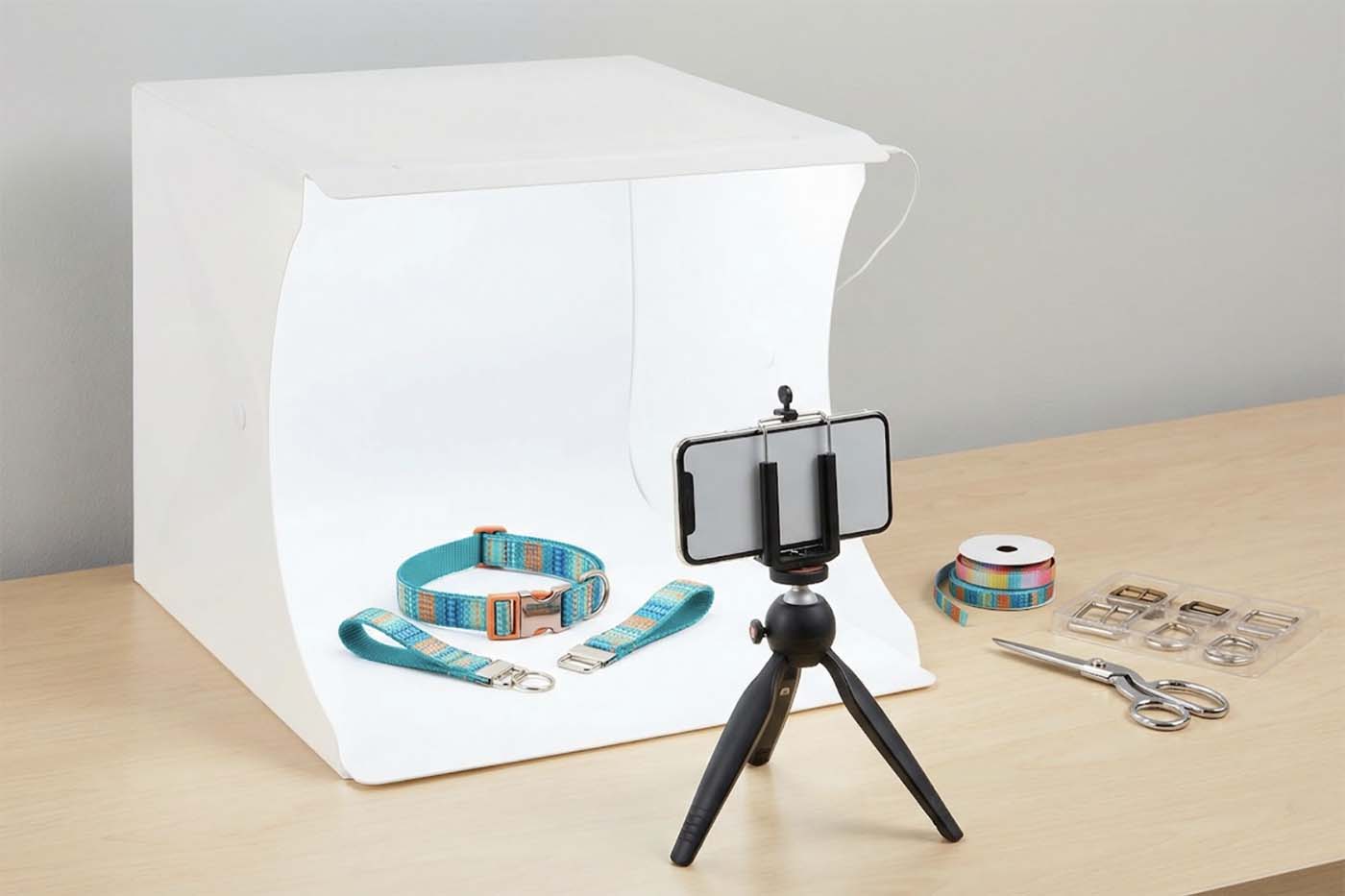
Harsh shadows can turn a polished product into a lackluster listing. If you’ve ever wrangled desk lamps and poster board on a photoshoot only to chase weird color casts, you know the pain.
Enter the light box: a fold-flat cube whose fabric diffusers and daylight-balanced LEDs bathe every surface in even, 5,600 K light—the same setup catalog studios rely on.
In this guide we stack four proven light boxes, from a $20 beginner cube to a 32-inch pro tent, so you can pick the right size, unfold it in minutes, and get back to selling. New to product photography? Country Brook Crafts’ basic product-photography guide walks you through the fundamentals.
How we picked the winners
We started with 25 light-box models released in 2024–2025 and kept only four that cleared every checkpoint below.
1. Color-true LEDs (≥ 90 CRI). Retail lighting specialists set 90-plus CRI as the floor for photography because it keeps whites neutral and metals vivid. FSG Electric pegs 95 CRI as the gallery standard, while PhotoWorkout tells sellers to “look for LEDs rated CRI ≥ 95.” Any model that hid its CRI, or scored below 90, was cut.
2. Right-sized interiors. We mapped each cube’s internal volume to four common catalog groups: jewelry, cosmetics, tech accessories, and soft goods, then chose the size tier that fits each group. Oversize cubes waste money, undersize tents warp perspective.
3. Fast setup and portability. Fold-flat walls, magnetic snaps, and USB-C power trimmed minutes off assembly and let us shoot in small apartments. Boxes that needed proprietary bricks or fiddly frames did not make the shortlist.
4. Honest value. Budget picks had to stay under $80, yet still deliver dense LED strips. Pro tents had to justify triple-digit prices with higher output, thicker diffusers, and sturdier shells.
Any model missing a diffuser panel, overstating interior size by more than 10 percent, or locking users into unique power supplies was eliminated. The four survivors cover budget, mid-range, pro, and large-capacity needs.For sellers exploring advanced workflows, integrating AI-generated product photography can dramatically speed up image creation and reduce costs compared to traditional studio setups, even when using a light box for consistent lighting.
Best budget light box for beginners
If your catalog tops out at earrings and keycaps, a ten-inch tent is plenty, and the Puluz Mini Photo Studio delivers for under $20 at Walmart.
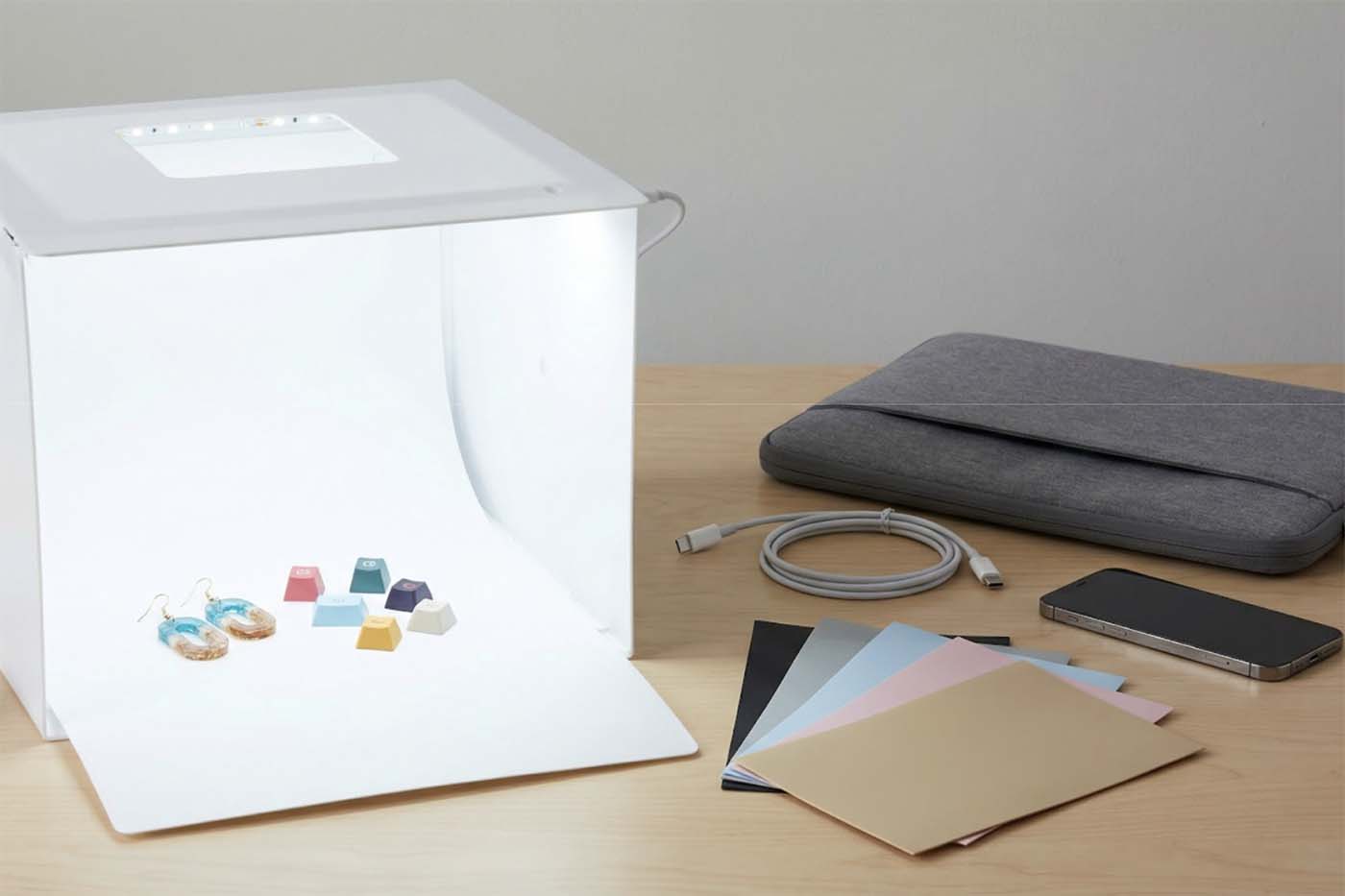
A small 10-inch light box is ideal for beginners shooting tiny products like jewelry and keycaps.
Folded, the polypropylene cube slips into a laptop sleeve. Snap the magnets and 104 daylight LEDs (CRI 95+) flood the interior with neutral light, a spec reviewers at SpectraLore say rivals pricier kits and sets up in roughly three seconds. Six double-sided PVC backdrops swap quickly, a roof port enables flat-lays, and the front flap opens wide for 45-degree hero shots, so shadows stay soft and corners stay bright with minimal editing.
The Puluz shines for Etsy makers, eBay resellers, and hobbyists selling items under six inches. Pair it with your phone’s portrait mode, and you’ll have store-ready images before the coffee cools.
Trade-offs are size and build. The plastic shell flexes more than pricier tents, and anything bigger than a pocket knife feels cramped. Still, at under twenty dollars, no budget box we tested matched its mix of portability, color accuracy, and ease of use.
In short, first-time sellers should start here. You get studio-grade lighting that folds away faster than you can refresh your listing.
Best mid-range light box for mixed product lines
Inventory growing beyond earrings? A 16-inch Samtian Portable Light Box fills the gap, giving cosmetics, tablet sleeves, or a pair of sneakers room to breathe without hauling studio gear across town.
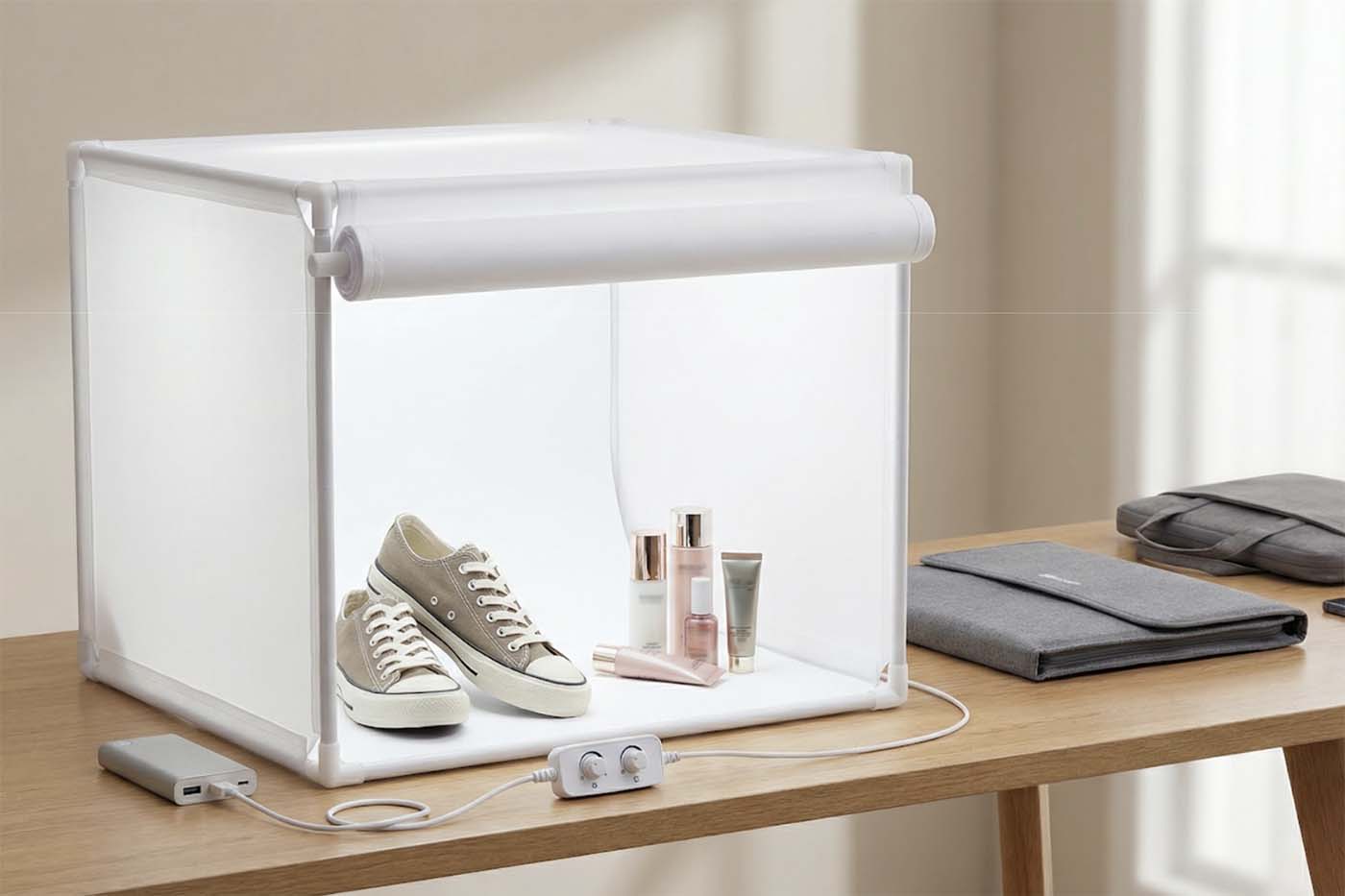
A 16-inch mid-range light box gives mixed product lines—like sneakers and cosmetics—room to breathe.
Inside, 168 dimmable LEDs push up to 2,200 lumens. A dial lets you move from 3,200 K tungsten to 5,500 K daylight. Reviewers measure the LEDs at CRI 95+, so leather reds stay true and matte packaging keeps its texture.
Setup remains coffee-break quick. Color-coded Velcro snaps the walls square, six PVC backdrops ride in a side pocket, and a roof port supports phone flat lays while the front panel swings wide for hero angles. Folded, the tent turns into a 2-inch-thick portfolio that runs on the USB-C brick you already own, convenient for hotel shoots or client offices.
Quirks are minor. Fabric sides flex if you lean on them, and brightness fades near the front edge, so keep subjects centered. At about $52 on Amazon (October 2025), the Samtian costs a little more than a budget cube and delivers strong value for mixed-size catalogs.
If you have outgrown a 10-inch box but are not ready for pro-studio pricing, this 16-inch tent sits in the practical middle lane: big enough for handbags, small enough for a carry-on, and accurate enough to skip color-correction marathons.
Best pro-level light box for serious sellers
Hundreds of SKUs leave no room for reshoots. The Orangemonkie Foldio 3 eases that pressure by packing studio power into a 25-inch cube that folds to only 2.5 inches thick.
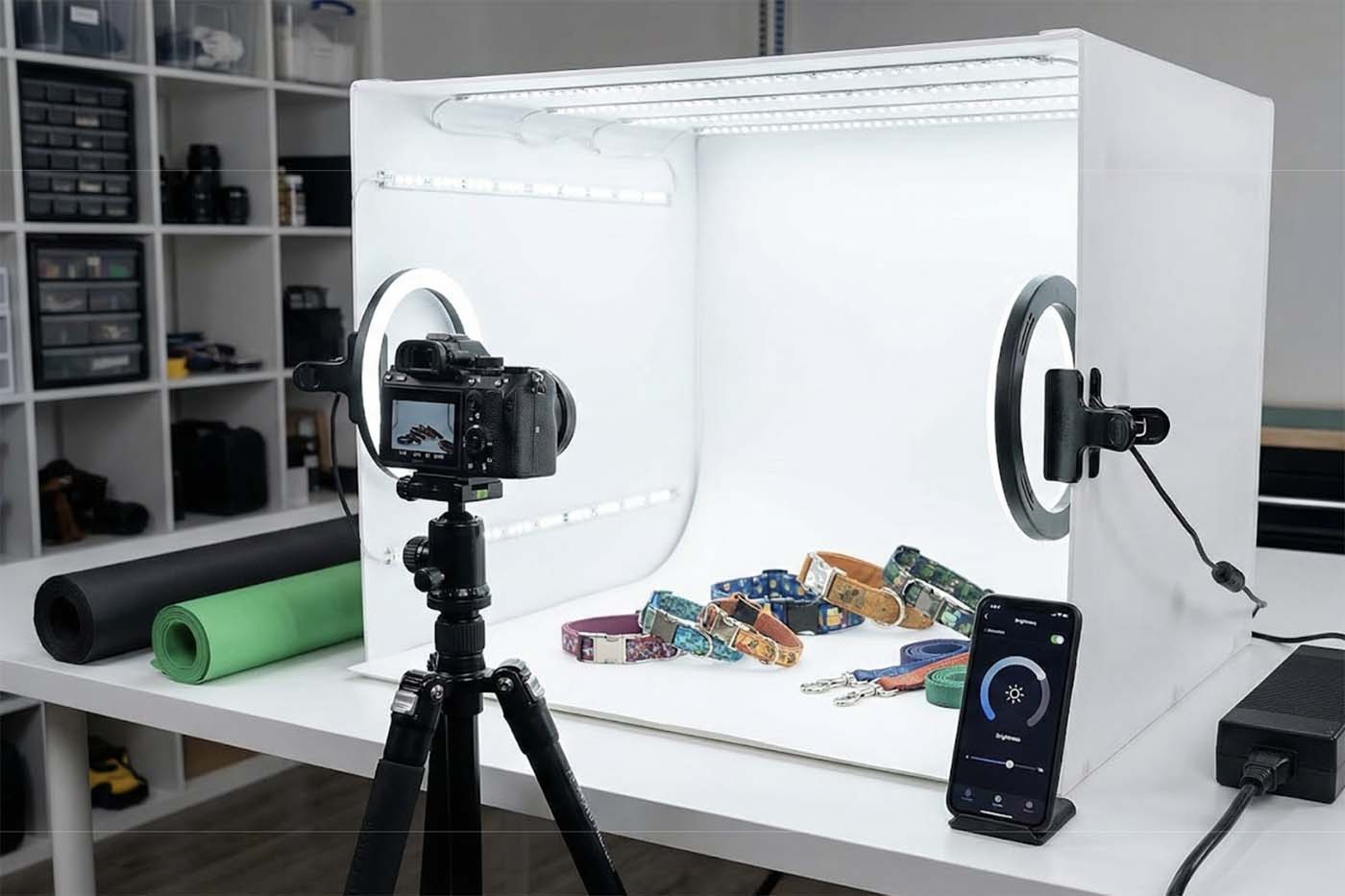
A rigid 25-inch pro light box with advanced lighting turns high-volume collar shoots into a repeatable catalog workflow.
Three magnetic LED strips hold 96 diodes in total (CRI 95+, 5,600 K daylight) and push almost 4,800 lumens for even coverage. Clip-on “Halo” bars erase nose shadows, and a Bluetooth dimmer pairs with the Foldio app so you can tweak brightness from your phone instead of nudging the tripod.
Build quality matches the lighting. Rigid ABS panels lock together with strong magnets, seams stay light-tight, and the whole unit weighs 3 lb 7 oz (1.6 kg) for trunk-friendly travel. Inside, wipe-clean white and black backdrops plus a chroma-green sheet support lifestyle, catalog, and background-removal work.
Downsides are table space and power. The Foldio needs a 19-volt, 3.4 A adapter and claims a small desk, but if you shoot catalog batches every week that is a fair trade for color-critical consistency.
At $139 direct from Orangemonkie (October 2025), the Foldio 3 costs more than mid-tier tents yet earns its keep the first time you skip a reshoot. Serious sellers get a portable, five-minute-setup studio they can trust launch after launch.
Best large-capacity light box for ambitious creators
When your product line stretches to backpacks and countertop appliances, a 32-inch Neewer Mega Studio (80 cm) gives you room to work without renting a full studio.
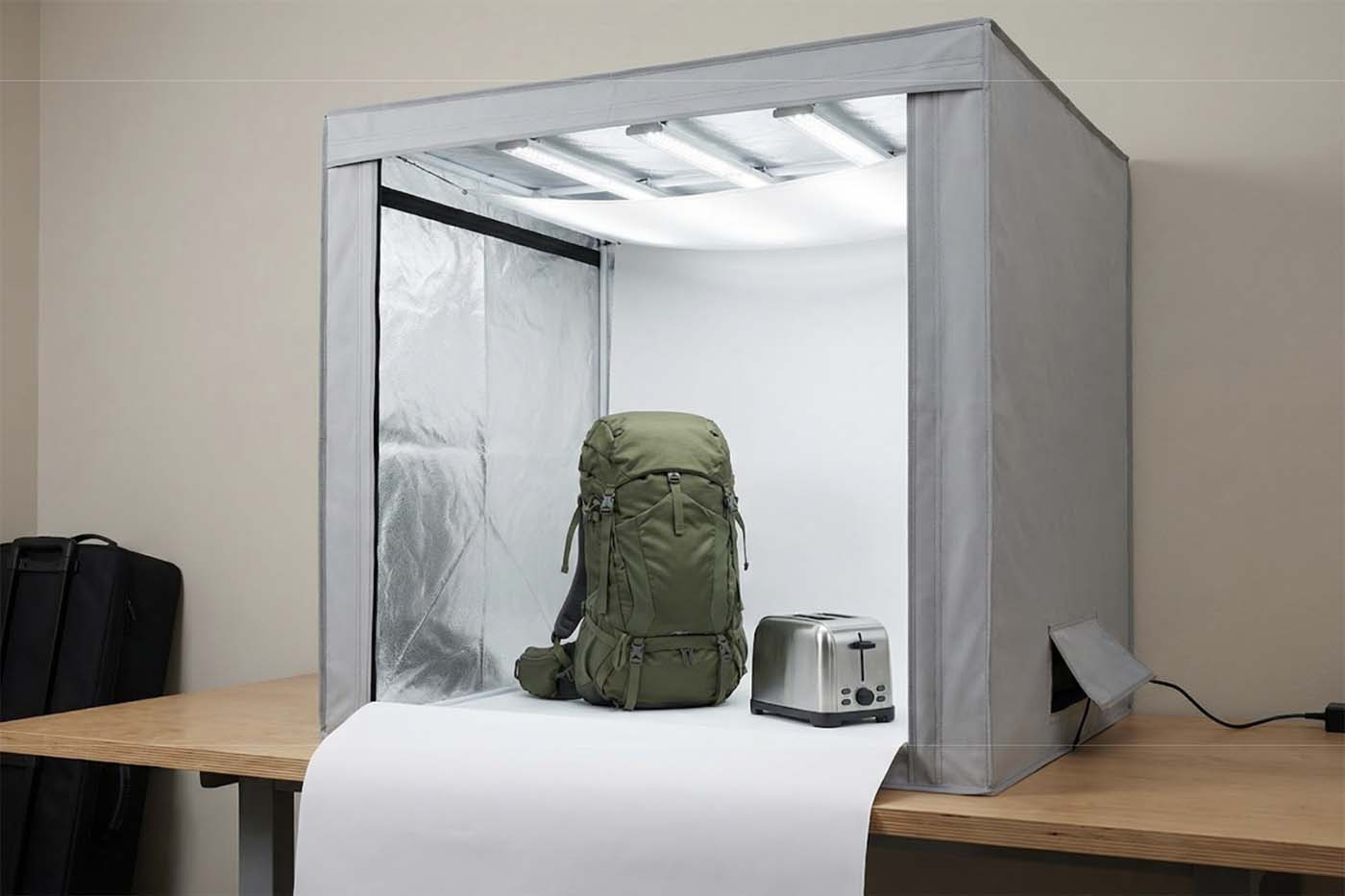
A 32-inch light box gives bulky products like backpacks and appliances studio-quality, even lighting.
The silver-lined cube unfolds to 32 × 32 × 32 inches (81 × 81 × 81 cm) and arrives with three sliding LED panels (70 diodes each, ≥ 8,000 lumens total, 6,000 to 6,500 K). Pull the light forward for glossy ceramics or push it back for softer fabrics. A diffusion sheet tames hot spots, and a dual-knob controller balances intensity between panels.
Despite its size, setup stays reasonable. Honeycomb boards stiffen the walls, the tent folds into a flat carry case, and a rear cable pass-through keeps power bricks outside the frame, which saves retouch time. A ceiling port handles overhead tripods, and the roll-down front curtain blends floor and backdrop for seamless hero angles.
Trade-offs are heft and cost. The kit weighs 16 lb and lists at about $189 on Amazon (October 2025), roughly four times a budget cube yet still cheaper than a single studio rental.
If you are moving into larger SKUs and need consistent, color-true lighting on demand, the Neewer 32-inch tent protects your workflow and keeps image quality uniform across every size.
How to choose the right light box for your products
Think in three quick steps: size, budget, and workflow.
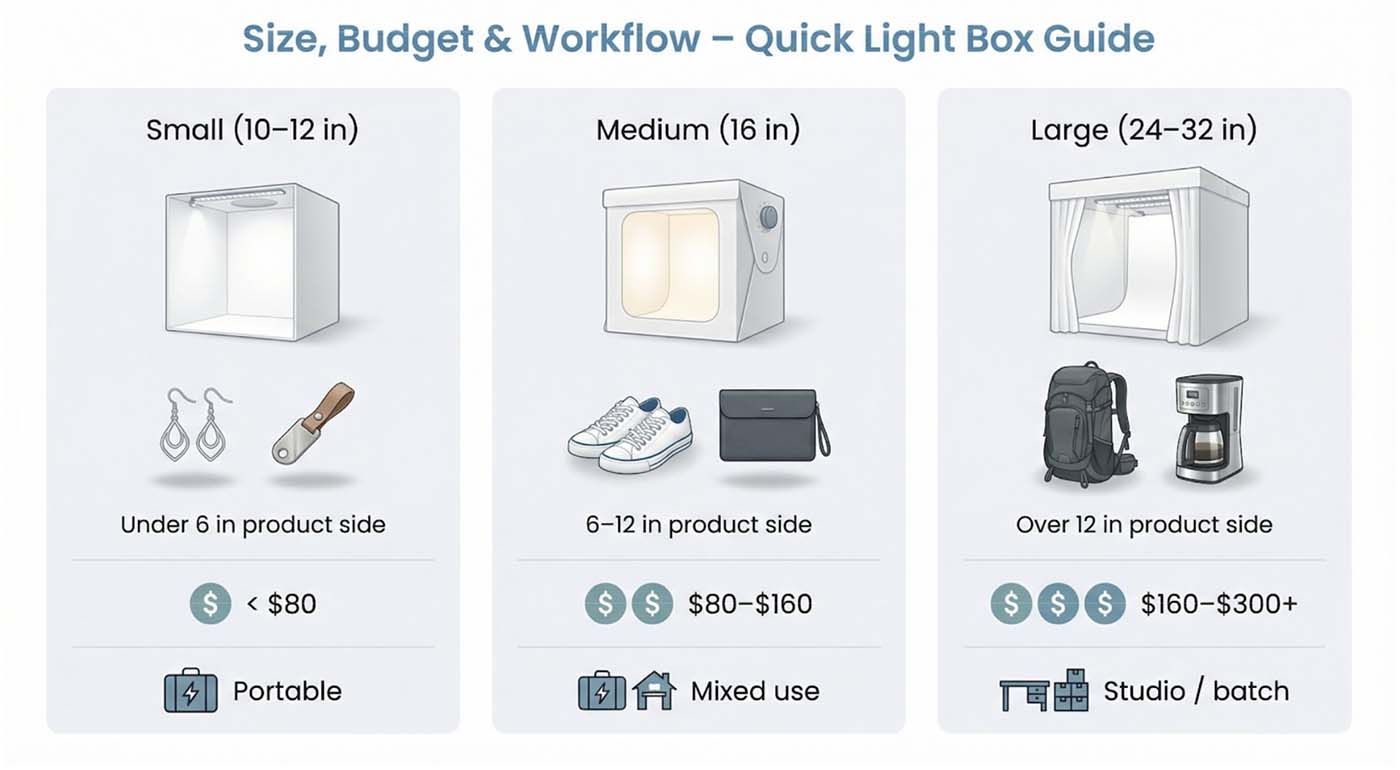
Use this quick guide to match your product size and budget to the right light box tier.
1. Match the cube to your largest item.
– Under 6 in (≈15 cm) on the longest side → 10–12 in budget cube
– 6–12 in (15–30 cm) → 16 in mid-range box with dimmable LEDs
– Over 12 in (30 cm) → 24–32 in pro or mega tent for even diffusion
Photography guides such as PhotoWorkout group light tents the same way: 16–20 in for jewelry and collectibles, 24–32 in for shoes or bags, and 32–40 in for helmets or bundles.
2. Set a realistic budget.
– Less than $80 buys a compact cube with fixed-output LEDs, ideal for small items, while budget-friendly light box accessory kits from Country Brook Crafts help beginner sellers dial in backgrounds and props without overspending.
– $80–$160 unlocks dimming, sturdier walls, and multiple backdrops.
– $160–$300 or more adds higher lumen counts, Bluetooth control, and wide interiors that fit backpacks, cookware, or similar gear. PhotoWorkout’s 2025 roundup shows large tents clustering in the $180–$250 band.
3. Prioritize your workflow.
– Shooting on the road? Choose fold-flat panels, USB-C power, and a carry handle.
– Stationary batch shooting? Weight matters less; look for rigid frames, wipe-clean PVC sweeps, and app-controlled lighting.
Square up these three factors, and the right light box usually reveals itself in seconds.
Quick setup tips for crisp, conversion-ready shots
1. Park the box by a neutral wall. Bright paint reflects color onto shiny products, so place the tent in front of gray or white drywall (Shopify’s DIY photography guide makes the same recommendation).
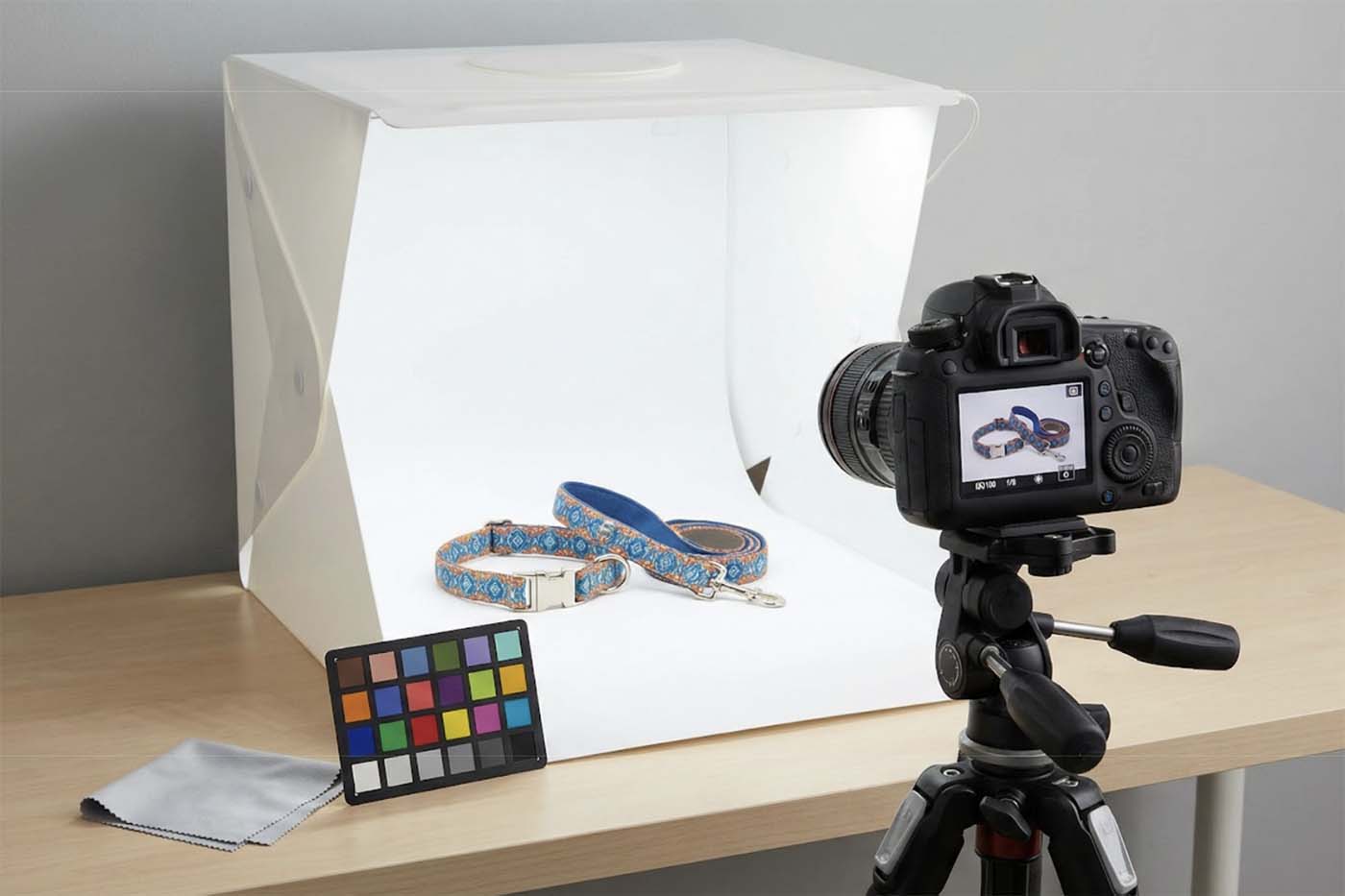
Parking your light box by a neutral wall, locking in manual settings, and using a color checker sets you up for consistent, conversion-ready product photos.
Lock in manual settings:
– White balance: Daylight (about 5,600 K)
– ISO: 100–200 for clean files
– Aperture: f/8 for edge-to-edge sharpness
– Lengthen shutter speed, not ISO, if the histogram looks dark. Shopify calls ISO 100 “ideal for minimal noise” in product shoots.
Fill about 80 percent of the frame. This leaves marketplaces headroom for auto-cropping and room for later graphics.
Dust before every shot. LED panels magnify lint; a two-second microfiber swipe now saves ten minutes of cloning later.
Shoot a color-checker first. Place the card in the opening frame, then use Lightroom’s eyedropper to sync perfect white balance across the batch. Five seconds here guarantee consistent metals, fabrics, and skin tones.
Frequently asked questions
Are light boxes better than shooting near a window?
Yes. Window light shifts from about 3,200 K at sunrise to 6,500 K under clouds, so color—and your edit time—changes all day. A light box locks in daylight-balanced LEDs (about 5,600 K), so every image matches the last (Photography TutsPlus).
Can I use a light box with just my phone?
Absolutely. Shopify’s product-photo guide notes that modern phones capture RAW files and resolve “more than enough detail for e-commerce” when paired with a tripod and even lighting. Enable your phone’s pro or RAW mode, keep ISO low, and let the box handle the light.
What size box should I buy if my products vary?
Choose a tent at least as wide as your largest regular item, then pad smaller pieces with foam risers. Oversizing costs little, but a box that is too small forces awkward angles and dark edges you will need to fix later.
How important is CRI, really?
Very. Review sites such as PhotoWorkout recommend CRI 95 or higher for product photography because it keeps reds vibrant and whites neutral. Lower scores muddy color and erode buyer trust.
Do I need multiple backdrops?
A white sweep meets most marketplace rules, yet black velvet makes metals pop, and chroma-green speeds background removal. Buy a tent that ships with at least white and black or accepts rolled paper sweeps.
Conclusion
Square up these three factors—size, budget, and workflow—and the right light box usually reveals itself in seconds.