Scheduling problems rarely show up all at once.
It starts with one double-booking. One technician running late. One patient showing up for the wrong time slot. Somebody shrugs, fixes it, moves on. No big scene. At least not yet.
Then it keeps happening.
That’s the part people underestimate. A broken schedule doesn’t always look dramatic from the outside. It just slowly makes everything harder. People wait longer. Staff get irritated. Customers call back. Front desks start sounding tense by 10 a.m. and, honestly, that mood spreads fast.
Different industries deal with different versions of this, but the pattern is weirdly similar. Healthcare providers have one kind of pressure. Field service teams have another. Still, when scheduling software can’t keep up, both end up dealing with the same thing: too many moving parts and no real room for mistakes.

The Whole Day Starts Bending Around One Missed Slot
Once the schedule gets off track, everything after it starts leaning in the wrong direction.
In clinics, patient scheduling affects more than the appointment itself. It affects room availability, staffing, follow-up timing, intake flow, billing, all of it. One late visit can throw off five more. You’ll notice staff trying to catch up in real time, adjusting little things on the fly, and that kind of patchwork only works for so long.
Field service teams do the same thing, just in a different setting. If one job runs over, the next customer waits. Then dispatch starts calling around. Then the tech is driving across town already behind and getting more behind. It snowballs. Fast.
And sure, both groups get very good at improvising. Maybe too good. That’s almost part of the problem. People get so used to working around a broken system that they stop expecting the system to actually help.
The Work Looks Different, but the Pressure Feels the Same
This is where the comparison gets interesting.
A healthcare provider might be dealing with no-shows, urgent add-ons, limited specialists, insurance timing, and patient expectations all at once. A field service team might be managing route density, technician skill matching, parts availability, and traffic delays. Not the same details, obviously.
But the pressure? Pretty close.
In both cases, scheduling is doing more than assigning time. It’s matching the right person to the right task, at the right moment, with the right amount of cushion. That’s a lot. And when the software or process can’t handle that complexity, people step in manually.
Manual fixes feel helpful in the moment. They also create more chances for confusion. One person updates the calendar. Another person doesn’t see it. Someone calls with a change, and now there are two versions of the truth floating around. Great. Exactly what nobody needed.

Comparison Shopping Usually Starts After People Get Tired
Most teams don’t go hunting for better systems because they love researching software. They do it because they’re fed up.
You see this a lot in the field service world when teams start comparing tools like Jobber vs Service Titan. On the surface, that sounds like a normal software decision. Underneath it, though, there’s usually frustration. Missed updates. Weak dispatch visibility. Too much reliance on texts, calls, and someone’s memory.
Healthcare teams hit a similar wall, even if the products they evaluate are different. They start asking harder questions. Can the system handle appointment types that vary in length? Can it support same-day changes without creating chaos? Can it show staff what’s actually happening instead of what was supposed to happen three hours ago?
That’s the thing. People don’t want more features just to have more features. They want fewer fires.
The Hidden Cost Is Usually Human
Scheduling breakdowns look operational on paper, but they feel personal when you’re inside them.
Patients feel ignored when they wait too long or get rescheduled too often. Customers get annoyed when the arrival window keeps moving. Staff members get blamed for problems they didn’t create. Front desk employees and dispatchers carry a lot of that emotional load, probably more than they should.
And then burnout creeps in. Quietly.
It’s hard to feel good at your job when your whole day is spent apologizing for timing issues. Even harder when the same problems keep repeating and everyone knows it. People start saying things like, “That’s just how it is here.” Which is usually a bad sign, honestly.
Because once a team accepts scheduling chaos as normal, fixing it gets harder. Not impossible. Just harder.
Better Scheduling Usually Means Fewer Tiny Decisions
What helps is rarely magic.
It’s usually a better structure. Clearer visibility. Smarter buffers. Systems that actually reflect how the work happens instead of forcing everyone into rigid blocks that look neat on a screen and fall apart in real life.
Some teams need better intake rules. Some need stronger routing logic. Some just need one place where updates happen and stay updated. Simple sounds simple, but it matters. A lot.
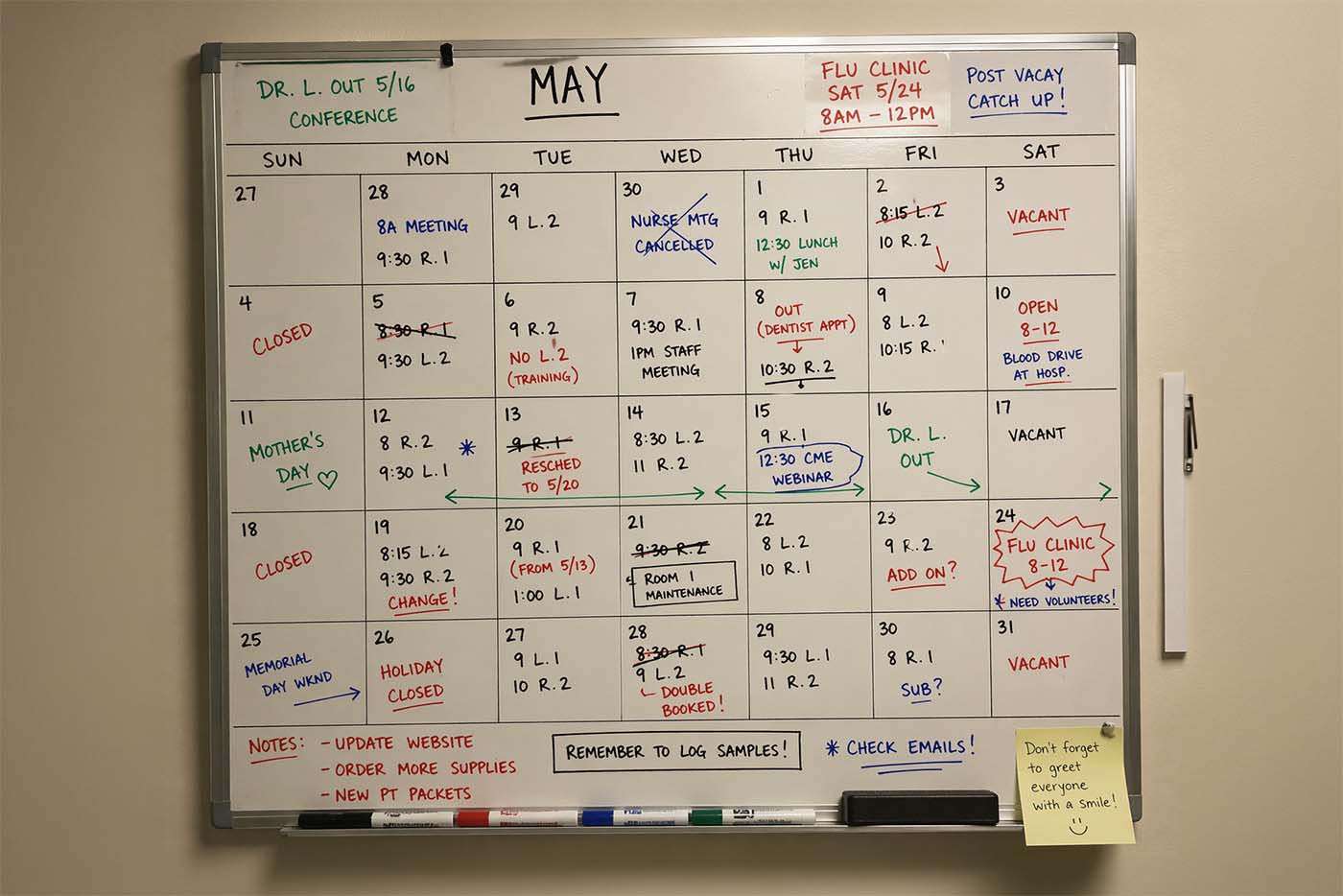
And people need trust in the schedule again. That might be the biggest thing. If staff assume the calendar is wrong, they start building their own side systems. Sticky notes, texts, whiteboards, mental checklists. Then the official schedule becomes just one suggestion among many, which is not ideal.
Why This Problem Keeps Showing Up Everywhere
Scheduling breakdowns keep happening across industries because the core challenge is the same: too many variables, not enough clarity, and humans trying to hold the whole thing together by effort alone.
That works for a while. Until it doesn’t.
Healthcare providers and field service teams may never use the same language for the problem, but they know the feeling. The day starts behind. The updates get messy. Everyone’s reacting instead of planning.
And once that becomes the norm, the work feels heavier than it should.
Fixing scheduling won’t solve everything. Still, it changes more than people expect. The day gets calmer. Staff stop scrambling so much. Patients and customers notice the difference. People can breathe a little.
Which, honestly, is a bigger deal than it sounds.