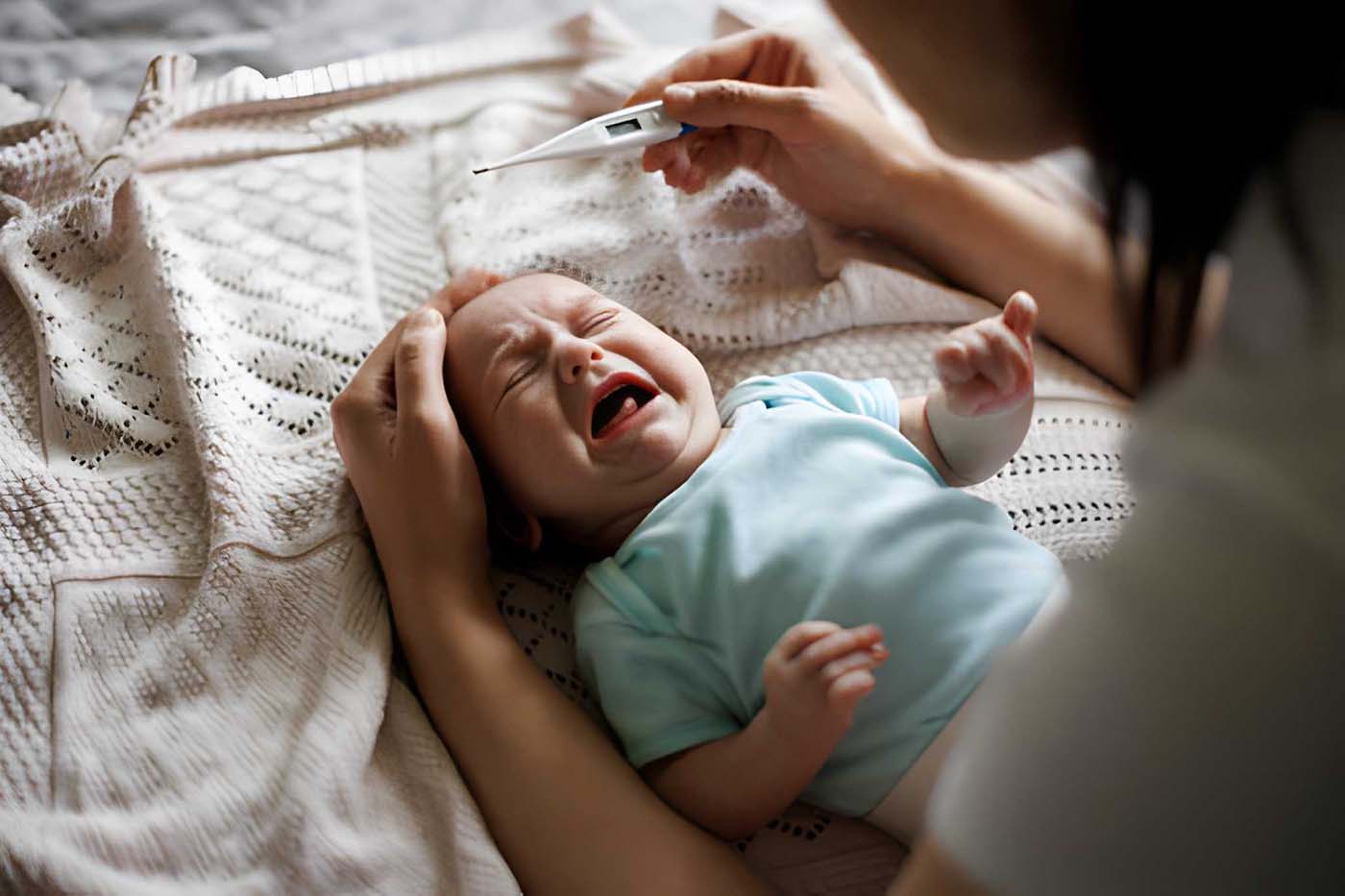
One of the first things you may be wondering as a new parent is: What temperature is a fever for a baby? It can be tricky to tell what your baby’s temperature is, particularly since infants and older babies can have different symptoms. An infant and toddler carrier can let you keep your baby close as you attend to their comfort and watch for any changes in their temperature.
After reading this article, you will be able to learn how to identify a fever, understand what is considered a normal or concerning temperature, and learn how the different thermometer methods compare. You’ll learn when you should call the doctor, at-home care tips to keep baby comfortable, and why watching your baby’s behavior matters as much as the readout of the thermometer.
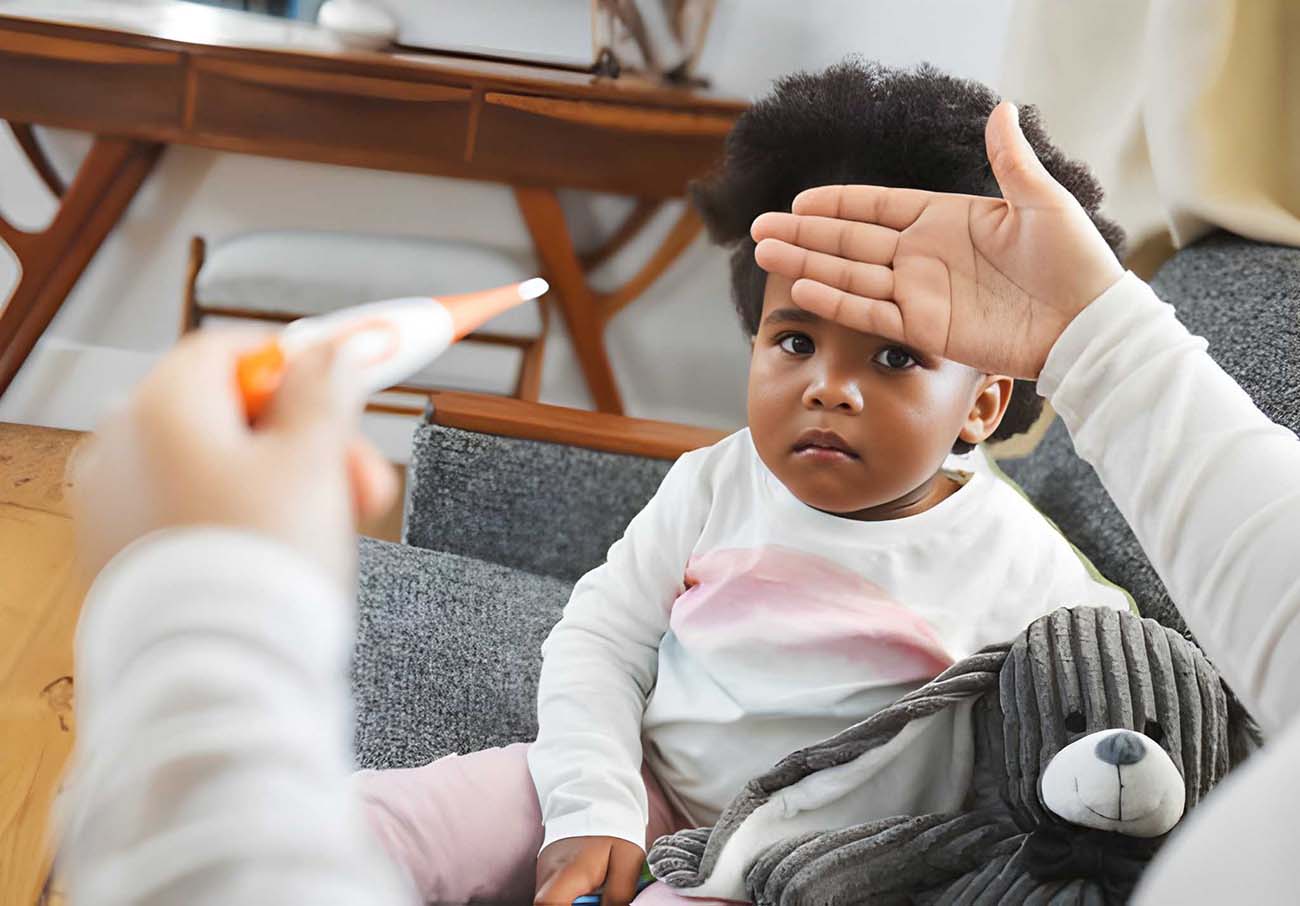
Defining Fever in Babies: A Temperature Guide
You may be wondering what temperature is a fever for a baby and how to take it. There are many reasons infants can be warm to touch, but it’s helpful to know the exact thresholds to help you respond effectively. The table below shows common measurement sites, how to use them, and the fever thresholds for babies:
| Measurement Site | How to Measure | Fever Threshold |
|---|---|---|
| Rectal | Insert a digital thermometer gently into the bottom | 100.4°F (38°C) or higher |
| Temporal Artery | Use a forehead thermometer scanning across the temple | 100.4°F (38°C) or higher |
| Oral | Place a digital thermometer under the tongue (children over 4 years) | 100.0°F (37.8°C) or higher |
| Tympanic | Use an ear thermometer (children over 6 months) | 100.4°F (38°C) or higher |
| Axillary | Place a thermometer under the arm | 99.0°F (37.2°C) or higher |
Knowing how to properly take your baby’s temperature will help you feel more confident when you’re checking for a fever. You can tell what your baby is feeling at a glance while in the infant or toddler carrier, so if they start to show any signs of distress or feeling unwell, you can very easily know it.
The Critical Age Difference: Newborns Under 3 Months
Infants under 3 months are at higher risk for severe infections and knowing what temperature is a fever for a baby is especially important at this age. Their immune systems are developing, so a fever can mean much more than just a temperature spike. Monitoring your baby closely allows you to detect subtle illness.
A fever of 100.4 F (38 C) or higher in an infant younger than 3 months is an emergency. Along with fever, there may be other symptoms, such as lethargy, poor feeding or crying that cannot be consoled. While a toddler carrier is the ideal for older babies, newborns need to be in your arms or a safe crib, especially when you’re monitoring their health.
Rectal Temperature: The Gold Standard for Accuracy
What temperature is a fever for a baby is easier to tell on rectal thermometer, as that is the most accurate reading of the core body temperature. The main reason why rectal temperature is needed for young infants under 3 months of age is because warning signs of a true fever in this age group can be recognized early and dire complications can be averted. When taking a rectal temperature, infants should be held securely but gently.
Rectal temperatures are said to be more accurate than other temperature reading methods such as taking an under arm or forehead temperature, and this gives you and your pediatrician a consistent baseline to assess your baby’s health. A digital thermometer designed for rectal use with a small amount of lubricant is used to obtain the accurate results. Once you get a reading, soothe your baby while in an infant or toddler carrier.
Fever by Measurement Site: Comparing Rectal, Oral, and Axillary
Understanding what temperature is a fever for a baby can depend on where you take the reading. Rectal temperature gives the most accurate measure of a baby’s core temperature. Axillary readings under the arm are convenient but less reliable and can be used for toddlers, who can be safely held in a toddler carrier, while oral temperatures are best for older children.
Temperature measurements at different locations may differ by approximately 0.5°F to 1°F. Rectal temperatures reflect the true internal body temperature, axillary temperatures are good for quick screening and oral temperatures are reliable for children older than 4 years old. If an armpit temperature reading indicates a fever, be sure to double check with a rectal or oral thermometer to make sure of your baby’s condition.

When to Call the Doctor: Understanding the Red Flags
Many parents always ask when a fever is worrisome, especially in the first few months. Knowing what temperature is a fever for a baby can be helpful, but monitoring their behavior is as important as looking for any warning signs. Look for the signs below when deciding whether to call a doctor or go to the emergency room:
– Rectal temperature 100.4°F (38°C) or higher in infants under 3 months: As a high fever may be the initial sign of a potentially serious infection in a young infant, you should seek medical advice soon.
– Sluggishness or difficult to wake: Babies who are much harder to wake, who aren’t moving normally, or who are unusually floppy may need emergency care.
– Difficulty breathing or turning blue: Having trouble breathing, making grunting sounds, sucking in under the ribs or a bluish tinge to the skin are signs that you need to head to the hospital, and using a toddler carrier may make it easier to hold your baby while you are on the way.
– Persistent, inconsolable crying: If the crying of your kid is so intense that you are not able to make them stop, then they might be in some kind of pain or distress, so it would really be nice if a doctor could come and have a look.
– Rash, stiff neck, or seizure: A rash of any kind which is reddish-purple, a soft spot that is bulging or sunken, a stiff neck, or seizure are the things that call for the most immediate emergency medical help without any question.
Normal Temperature Fluctuations in Infants
Infant body temperature shifts naturally throughout the day, and many of these changes are normal. Many parents worry about every little increase or decrease in their baby’s temperature, but knowing what temperature is a fever for a baby can help you understand when a number is worthy of attention. Gentle movement, feeding, or even light crying can temporarily increase the temperature without indicating disease.
Clothing, room temperature and daily routine affect how warm an infant is. Temperature can also vary during sleep or rest. particularly when a baby is sleeping on your chest or nestled snugly in a toddler carrier once they are big enough to use one. Being aware of these normal variations may make it easier to recognize an actual fever.
Home Care Strategies to Comfort a Febrile Baby
Caring for a sick baby is mostly about making them feel comfortable and keeping them hydrated, once you know what temperature is a fever for a baby. Light clothing, a cool environment and plenty of rest can really help them feel better as their body battles the infection. Quiet rocking or soft cuddling often works to calm them down when they are feeling warm and irritable.
Small and frequent feeds are advised as the fever can cause dehydration. Babies who are a bit older, and can fit into a toddler carrier, will likely also feel more secure and comfortable when being held close to you as you keep an eye on them. Feeding breast milk, formula or oral rehydration solutions as per the advice of the doctor will not only help the baby recover, but will also keep them comfortable until the fever goes away.
The Importance of Looking at Your Baby’s Behavior (Not Just the Number)
Knowing your baby’s temperature is important, but it does not tell you the whole story. It’s helpful to know what temperature is a fever for a baby, but their behavior can tell you more about how they really feel. An infant who’s alert, taking a reasonable amount of milk, and looking at you with interest is usually managing better than one who is weak, or uninterested.
Your baby’s behavior can give you an indication of how comfortable they are as their body fights infection. If your baby is fussy, makes you wonder if they are in pain or has you worried, and you’ve done everything in your power to soothe them, you should let them be checked out by a doctor. Some babies can be soothed and calmed while they’re in a toddler carrier, giving you another way to keep them near and keep an eye on their behavior.